

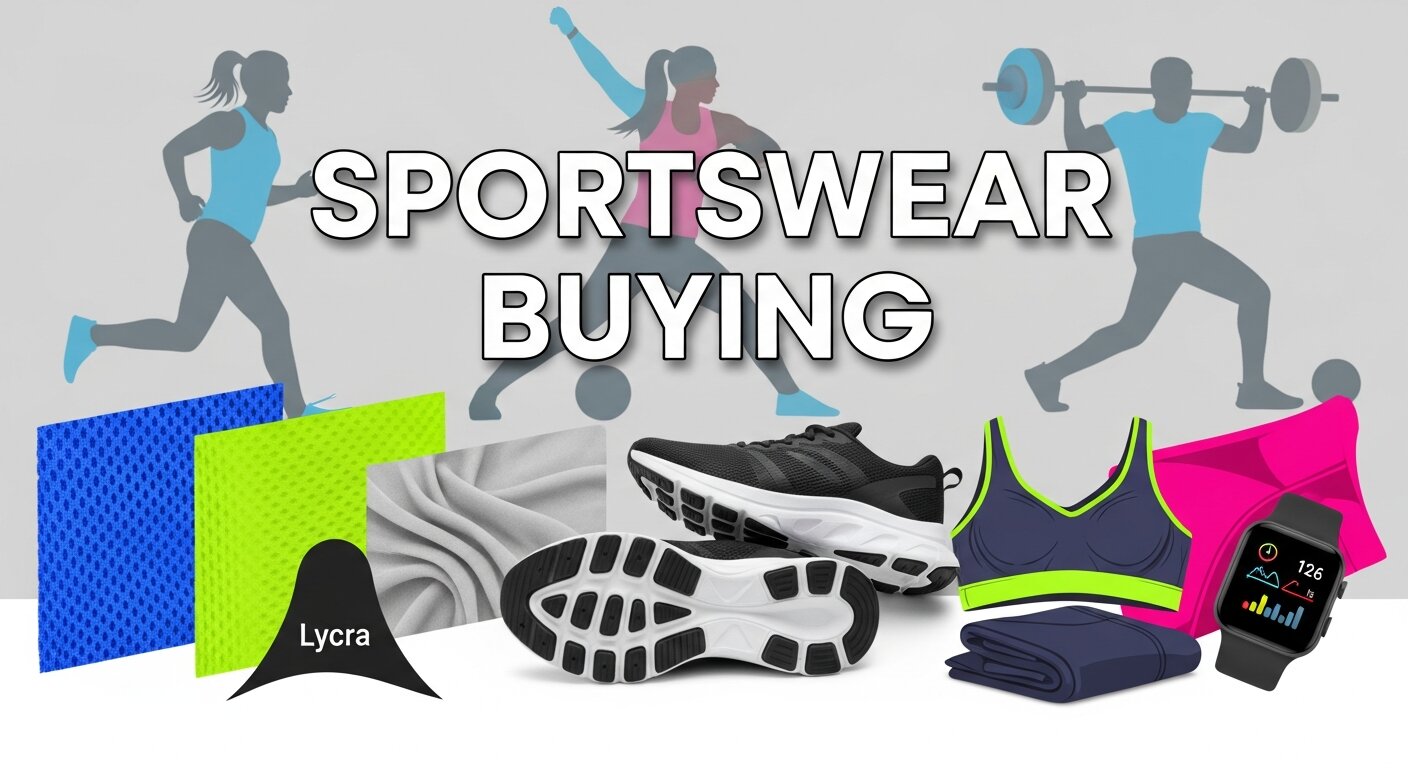
Finding the right athletic gear transforms your workout. This Sportswear Buying Guide helps you choose the perfect fit, elevate your performance, and invest in durable, comfortable apparel.
This comprehensive article explores everything you need to know about selecting activewear. We cover fabric technologies, activity-specific gear recommendations, sizing strategies, expert tips, and common pitfalls. Use these actionable insights to upgrade your fitness wardrobe and maximize your training results today.
Why You Need a Reliable Sportswear Buying Guide
Choosing the right activewear involves much more than simply picking a color you like or a brand you recognize. The clothing you wear during physical activity directly impacts your comfort, mobility, and overall performance. A poorly fitted shirt or non-breathable fabric ruins a great workout, while scientifically engineered fabrics actually enhance your endurance and recovery.
We created this comprehensive Sportswear Buying Guide to help you navigate the crowded market of athletic apparel. With countless brands claiming to have the best moisture-wicking technology or the most supportive compression gear, making an informed decision requires understanding the specific mechanics of athletic fabrics and how they interact with your body during movement. Whether you are building your first fitness wardrobe or upgrading your professional athletic gear, understanding the principles of activewear construction saves you money and boosts your athletic output.
The Psychology of Athletic Wear
Enclothed cognition is a psychological phenomenon where the clothes you wear influence your mental state and performance. Putting on high-quality, well-fitting sportswear signals to your brain that it is time to work hard. When you feel confident and comfortable in your gear, you push harder, run faster, and lift heavier. This psychological edge, combined with the physical benefits of performance fabrics, makes investing in the right activewear a crucial component of your overall fitness strategy.
The Foundation of Athletic Wear
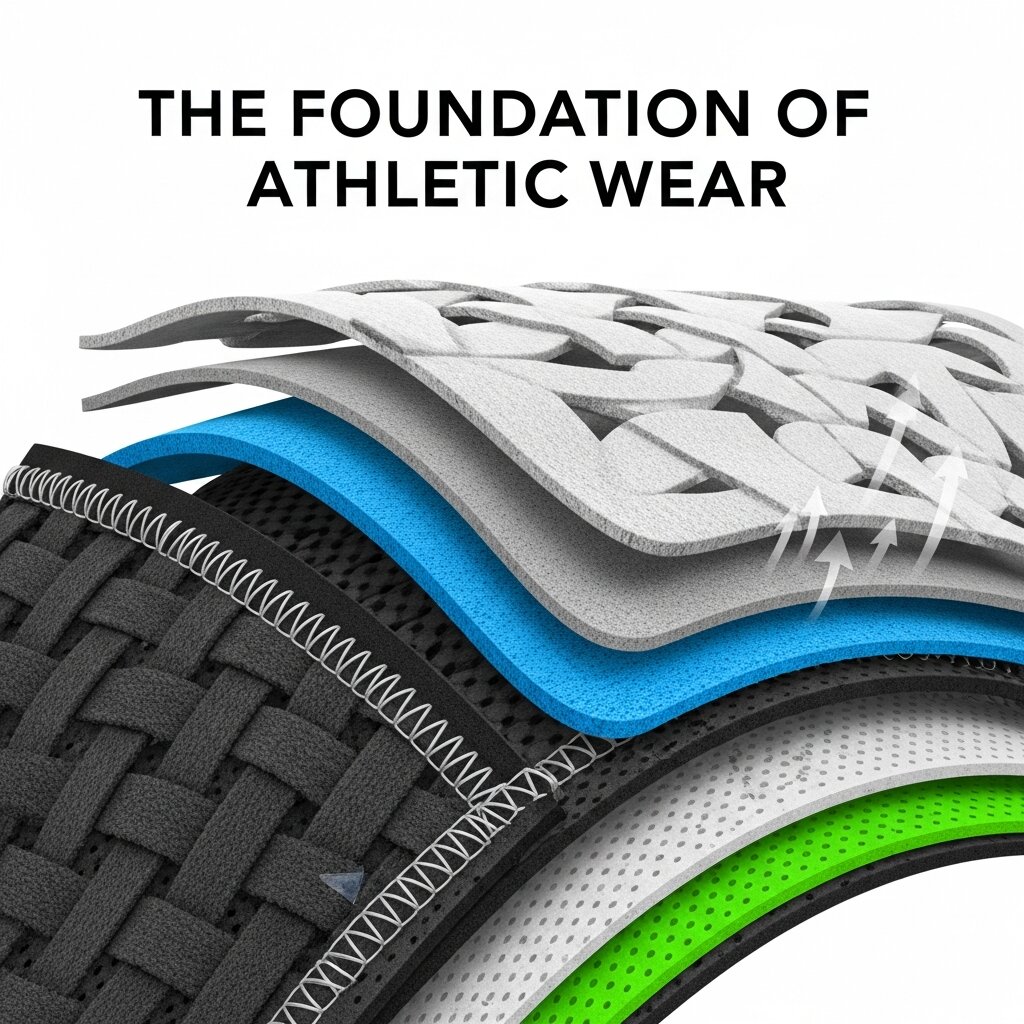
The foundation of any effective sportswear lies in its fabric. The materials used dictate how the garment stretches, breathes, and manages moisture.
Synthetic vs. Natural Fibers
For decades, cotton was the default choice for gym clothes. However, experts now advise against wearing pure cotton for strenuous workouts. Cotton absorbs sweat rapidly but dries incredibly slowly, leaving you wearing a heavy, wet garment that causes chafing and temperature regulation issues.
Modern activewear relies heavily on synthetic blends designed specifically for athletic performance:
- Polyester: The workhorse of the fitness apparel industry. It is lightweight, durable, wrinkle-resistant, and highly breathable. More importantly, polyester is naturally hydrophobic, meaning it repels water and pushes sweat away from your skin to evaporate.
- Nylon: Known for its incredible strength and elasticity. Nylon is softer than polyester and offers a smoother, more comfortable feel against the skin. It is frequently used in high-end leggings and sports bras.
- Elastane (Spandex/Lycra): This synthetic fiber provides exceptional stretch and recovery. You will rarely find a garment made entirely of elastane; instead, it is blended with polyester or nylon (usually between 5% and 15%) to give garments the stretch needed for unhindered movement.
- Merino Wool: The ultimate natural performance fiber. Unlike regular wool, merino is incredibly fine and soft. It naturally wicks moisture, regulates body temperature in both hot and cold environments, and possesses natural antimicrobial properties that prevent odor buildup. It is highly recommended by the American College of Sports Medicine for outdoor activities.
Moisture-Wicking Technology Explained
Moisture-wicking fabrics utilize capillary action to draw sweat away from the skin and pull it to the surface of the fabric, where it can evaporate quickly. This process keeps your body cool during high-intensity workouts and prevents the rapid cooling effect that happens when you wear wet clothes in a cold environment.
Compression Materials
Compression garments fit tightly against the skin, applying gentle, continuous pressure to your muscles. Research suggests that compression wear improves blood circulation, reduces muscle oscillation (the tiny vibrations that occur in your muscles upon impact), and speeds up recovery times by flushing out lactic acid.
Choosing Sportswear Based on Activity
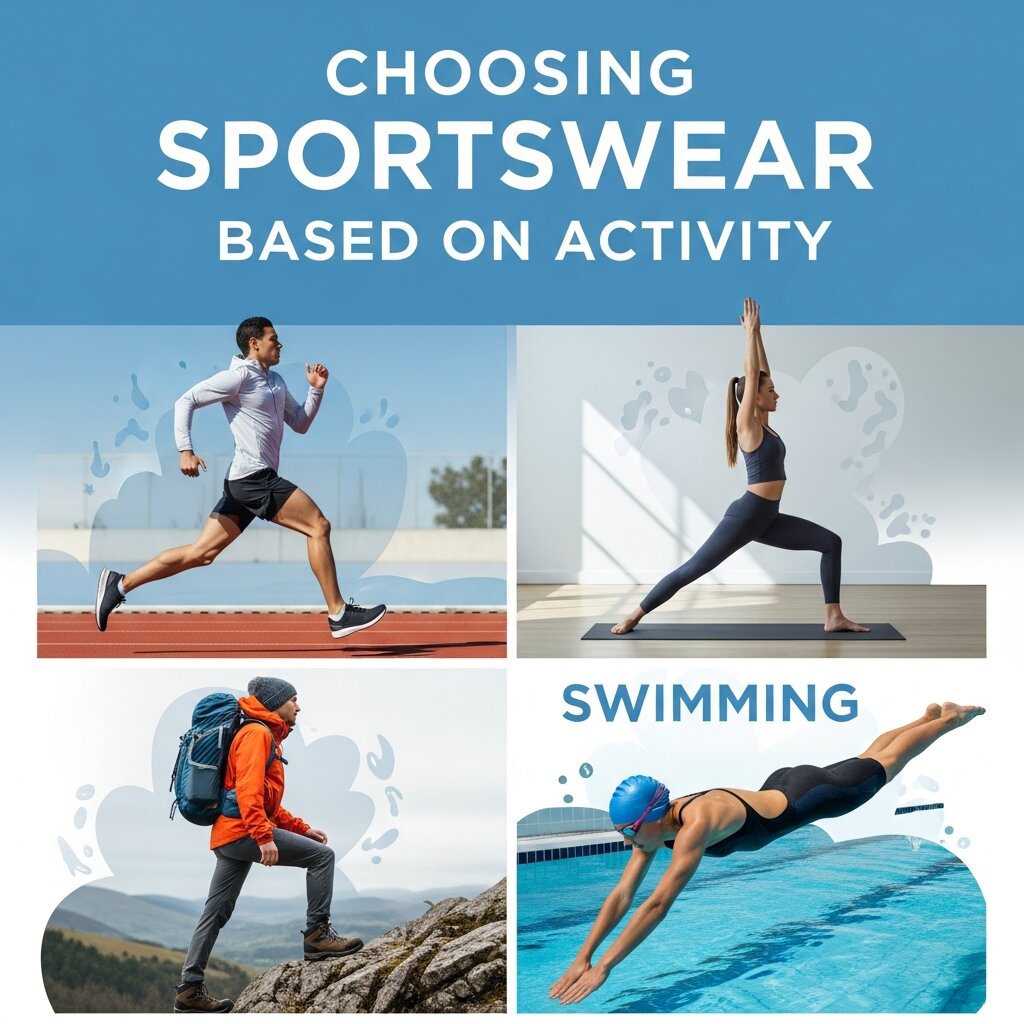
Your training style dictates your apparel needs. What works perfectly for a long-distance runner will likely feel restrictive and uncomfortable for a yogi.
Running and Jogging
Runners need lightweight, highly breathable gear that minimizes friction.
- Tops: Look for seamless construction to prevent underarm chafing. Bright colors and reflective details are essential for outdoor running safety.
- Bottoms: Running shorts with built-in liners offer support and breathability. For colder weather, specialized running tights with wind-resistant front panels and breathable back panels provide the perfect balance.
- Accessories: Moisture-wicking socks are non-negotiable to prevent blisters.
Weightlifting and Gym Training
Strength training requires durable fabrics that withstand contact with knurled barbells and rough gym equipment.
- Tops: Opt for slightly looser fits or highly stretchable fabrics that allow for a full range of motion during overhead presses and squats.
- Bottoms: Durability and stretch are key. Ensure leggings are completely opaque (squat-proof). Men should look for shorts that fall just above the knee to prevent the fabric from catching on the kneecap during squats.
- Footwear: Flat-soled shoes provide the stability needed for heavy lifting, unlike highly cushioned running shoes.
Yoga and Pilates
Mobility and comfort reign supreme in mindful movement practices.
- Apparel: Look for buttery-soft fabrics like high-grade nylon blends. Leggings with high, wide waistbands stay in place during inversions. Avoid zippers, drawstrings, or thick seams that press uncomfortably into your body during floor poses.
High-Intensity Interval Training (HIIT)
HIIT demands maximum sweat management and multidirectional support.
- Apparel: Maximum moisture-wicking capabilities are required. Women need high-impact sports bras that offer rigorous support. Men benefit from compression liners under their shorts to prevent chafing during explosive movements.
Outdoor and Winter Sports
Layering is the secret to outdoor performance.
- Base Layer: Moisture-wicking (polyester or merino wool) to keep skin dry.
- Mid Layer: Insulating (fleece) to trap body heat.
- Outer Layer: Weather-resistant (Gore-Tex or similar) to block wind and rain while allowing sweat vapor to escape.
Finding the Perfect Fit: Sizing and Body Types
Even the most technologically advanced fabric fails if the garment fits poorly. Sizing varies drastically between brands, making it crucial to know your exact measurements.
Measuring Yourself Correctly
Do not rely on standard letter sizes (S, M, L). Instead, use a soft measuring tape to find your exact numbers:
- Chest/Bust: Measure around the fullest part, keeping the tape horizontal.
- Waist: Measure around the narrowest part of your torso.
- Hips: Measure around the fullest part of your hips and glutes.
- Inseam: Measure from the very top of your inner thigh down to your ankle bone.
Always consult a brand’s specific size chart before purchasing. If you fall between sizes, size down for compression gear and size up for outer layers.
Mini-Conclusion: Taking the time to properly measure your body ensures that your activewear supports your movements rather than restricting them. A great fit eliminates distractions, allowing you to focus entirely on your physical performance.
Sportswear Buying Guide Comparison Table
Use this quick reference matrix to identify the ideal fabrics and fit characteristics for your preferred training style.
|
Activity Type |
Ideal Fabrics |
Fit Characteristics |
Key Feature Priority |
|---|---|---|---|
|
Running |
Lightweight Polyester, Elastane |
Aerodynamic, close-to-body |
Moisture-wicking, Anti-chafe |
|
Weightlifting |
Durable Nylon, Cotton-poly blends |
Flexible, articulated joints |
Durability, Squat-proof |
|
Yoga/Pilates |
Brushed Nylon, High Elastane |
Skin-tight but unrestrictive |
Four-way stretch, No hardware |
|
HIIT |
Advanced synthetic blends |
Supportive, high-compression |
Maximum breathability, Support |
|
Outdoor Sports |
Merino Wool, Gore-Tex |
Layered, adjustable |
Weather resistance, Insulation |
The Importance of Footwear in Your Athletic Wardrobe
No Sportswear Buying Guide is complete without addressing footwear. Wearing the wrong shoes drastically increases your risk of injury and decreases your efficiency.
Running shoes feature thick, shock-absorbing midsoles designed for forward, heel-to-toe motion. However, if you wear running shoes to lift weights or perform lateral agility drills, that same thick, squishy sole creates instability, increasing the risk of rolling an ankle.
Cross-training shoes offer a flatter, denser sole that provides a stable base for lifting weights while still offering enough flexibility for light cardio and plyometrics. For specialized sports like cycling or rock climbing, purpose-built footwear is an absolute necessity. Make sure to pair your footwear with appropriate recovery gear to maintain foot health over time.
Pro Tips and Expert Insights for Buying Activewear
To truly master your activewear choices, consider these advanced strategies utilized by fitness professionals:
- The Squat Test: When trying on leggings or shorts, perform a deep squat in a well-lit room (or in front of a mirror). Check that the fabric does not become sheer when stretched over your knees and glutes.
- Seam Placement Matters: Look for flatlock seams. Unlike traditional seams where the fabric edges are folded inward and sewn together, flatlock seams lay completely flat against the skin, drastically reducing friction and chafing during repetitive movements.
- Check the Gusset: High-quality athletic bottoms feature a gusset—a diamond or triangular piece of fabric sewn into the crotch area. This seemingly small detail relieves stress on the seams, increases your range of motion, and prevents the garment from riding up uncomfortably.
- Test the Stretch: Pull the fabric in all four directions. It should stretch easily but, more importantly, snap back to its original shape immediately. Poor quality elastane stretches out and sags after just a few wears.
Common Mistakes to Avoid When Purchasing Workout Clothes
Even seasoned athletes make purchasing errors. Avoid these common pitfalls to ensure your wardrobe works for you:
- Ignoring Care Instructions: Performance fabrics require special care. Washing activewear in hot water, using harsh detergents, or running them through a hot dryer breaks down the elastane, destroys the moisture-wicking treatments, and bakes odors into the fabric.
- Using Fabric Softener: Never use fabric softener on athletic wear. Softeners leave a waxy coating on the fibers that traps bacteria, locks in bad smells, and completely ruins the fabric’s ability to wick sweat.
- Prioritizing Fashion Over Function: While looking good in the gym is a nice bonus, prioritizing aesthetics over technical performance leads to uncomfortable workouts. Always prioritize fit, fabric, and function.
- Buying “One Size Fits All” Sports Bras: High-impact activities require precise support. Women should seek out sports bras that offer specific band and cup sizing rather than generic sizing.
Mini-Conclusion: By avoiding these common errors, you protect your financial investment in high-quality activewear and ensure your garments perform optimally for years to come.
Caring for Your Sportswear to Maximize Lifespan
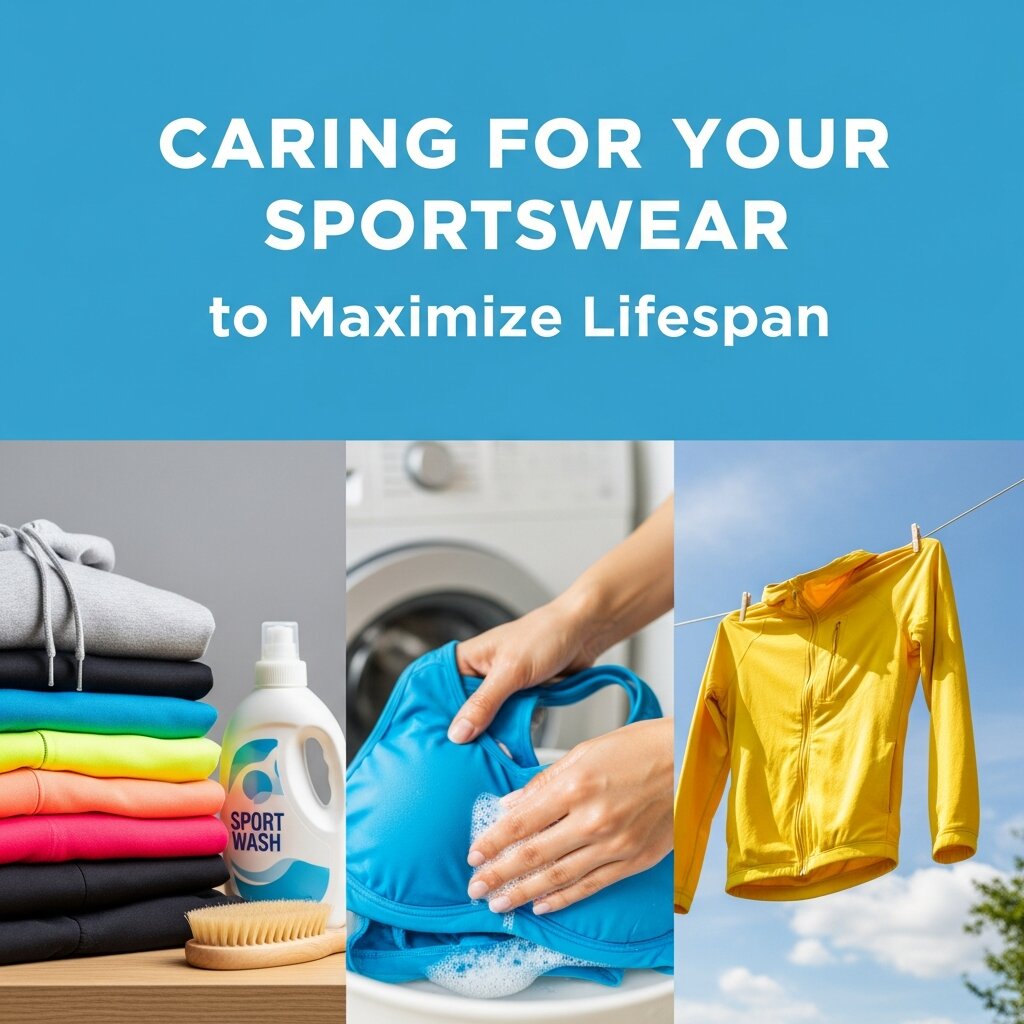
Purchasing premium gear is only half the battle; maintaining it is equally critical. High-tech fabrics degrade rapidly if mishandled.
Always wash your workout clothes in cold water on a gentle cycle. Turn garments inside out to protect the outer finish and allow the water and detergent direct access to the side of the fabric that absorbed your sweat and body oils. Choose a detergent specifically formulated for activewear, which contains enzymes designed to break down body oils without leaving a residue.
Finally, air dry your sportswear whenever possible. The extreme heat of a dryer melts synthetic fibers and destroys elastic waistbands. Hanging your gear on a drying rack extends its lifespan exponentially, ensuring your favorite pieces remain in your rotation for maximum longevity.
Conclusion
Choosing the right gear takes your fitness journey to the next level. We hope this Sportswear Buying Guide empowers you to select high-quality, perfectly fitting athletic apparel. Ready to upgrade your workout wardrobe? Start applying these expert tips today and experience the immediate difference premium activewear makes in your daily performance.
FAQs
1. What is the most breathable fabric for sportswear?
Polyester and micro-mesh nylon blends are widely considered the most breathable fabrics. They allow air to circulate freely while actively pulling moisture away from your skin, making them ideal for high-intensity training and hot weather environments.
2. How should a sports bra fit?
A sports bra should fit much more snugly than a daily bra, but it should not restrict your breathing or dig painfully into your shoulders or ribcage. You should be able to fit exactly two fingers under the shoulder straps and the bottom band.
3. Why is activewear so expensive?
Premium activewear uses advanced, chemically engineered synthetic fibers, specialized moisture-wicking treatments, and complex construction methods like flatlock stitching and laser-cut ventilation. These technical innovations and durable materials cost significantly more to produce than standard cotton apparel.
4. Can I wear running shoes for weightlifting?
It is highly discouraged. Running shoes have soft, compressible soles designed to absorb impact. When lifting heavy weights, this soft sole creates a highly unstable surface, increasing your risk of injury and decreasing the amount of force you can push into the ground.
5. How often should I replace my workout clothes?
It depends on the quality of the garment and how often you train. Generally, sports bras lose their elasticity after 6 to 12 months of regular use. Leggings and tops should be replaced when the fabric begins to sag, pill excessively, or retain a permanent odor even after washing.
6. What does “four-way stretch” mean?
Four-way stretch fabric stretches both horizontally and vertically, moving seamlessly with your body and returning to its original shape. This is essential for activities that require deep ranges of motion, such as yoga, gymnastics, and weightlifting.
7. Why do my workout clothes still smell after washing?
Synthetic fibers are excellent at repelling water but tend to hold onto body oils. If you wash your gear in warm water or use standard detergents, these oils become trapped in the fabric weave. Using an activewear-specific, enzyme-based detergent eliminates these lingering odors.
8. Is compression gear actually beneficial?
Yes. Studies indicate that compression gear improves blood flow, reduces muscle fatigue, and minimizes the micro-trauma caused by muscle vibration during impact sports. It is especially beneficial for long-distance runners and individuals recovering from intense training sessions.
9. Are seamless leggings better than stitched leggings?
Seamless leggings are knitted in a circular fashion, eliminating heavy seams down the sides. They offer a more comfortable, second-skin fit and drastically reduce chafing, making them superior for activities requiring high flexibility, though they may offer slightly less structural compression.
10. What is the best way to wash my sportswear?
Turn your garments inside out, wash them in cold water using a specialized athletic detergent, and avoid fabric softeners completely. To preserve the elasticity and moisture-wicking properties, always air dry your activewear instead of using a machine dryer.
