

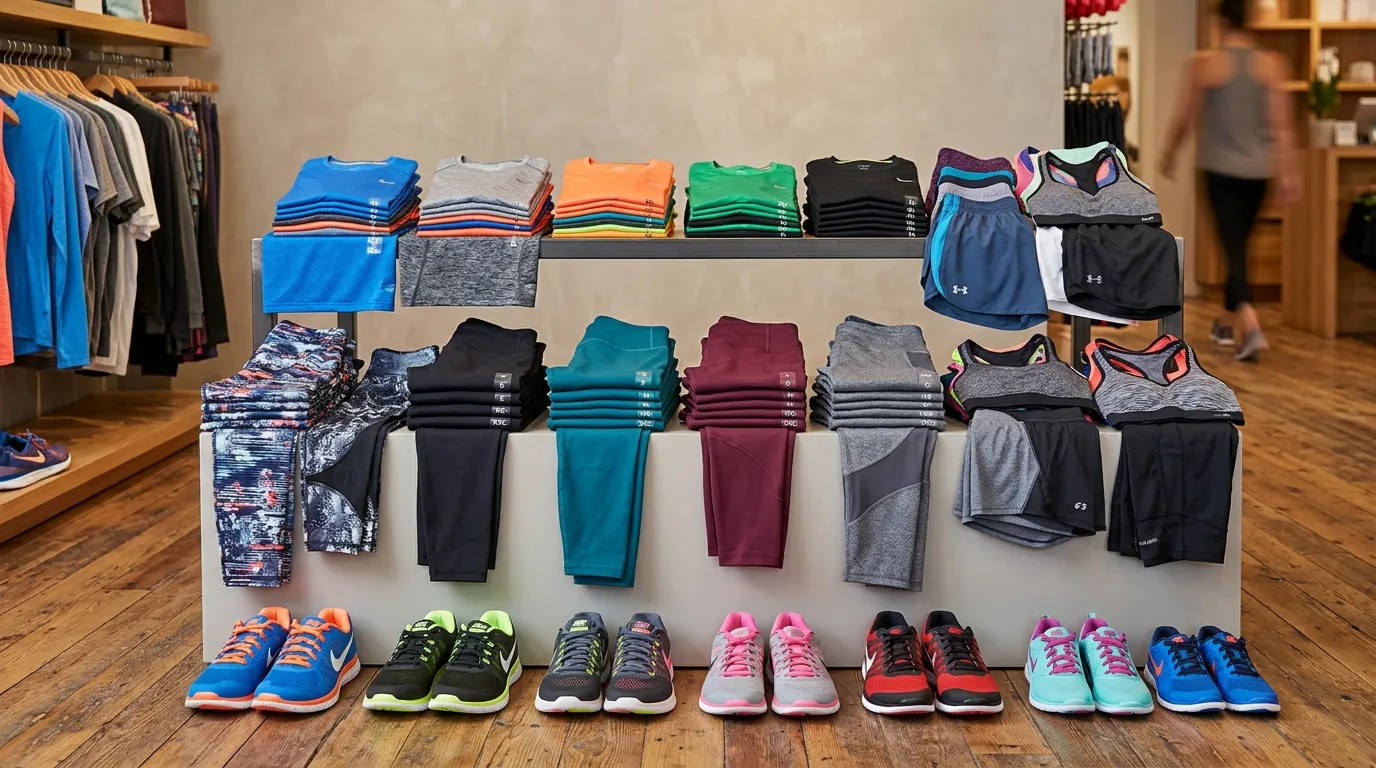
Finding the perfect fit can transform your workout experience entirely. Welcome to our ultimate sportswear size guide, designed to help you navigate the confusing world of athletic apparel sizing so you can train with absolute comfort, optimal support, and peak confidence.
This complete sportswear size guide provides everything you need to know about selecting the right activewear. We cover detailed measuring techniques, international size conversions, and specific fit guidelines for men, women, and children. You will learn how fabric types impact sizing, discover expert tips to ensure accuracy, and learn to avoid the most common measuring mistakes that ruin athletic performance.
The Importance of a Reliable Sportswear Size Guide
Having a dependable sportswear size guide is critical for anyone looking to optimize their athletic performance. When you are running, lifting, or stretching, your clothing needs to move with you seamlessly. Ill-fitting athletic wear leads to chafing, restricted blood flow, and a profound lack of support exactly when you need it most. By consulting a comprehensive sportswear size guide, you ensure that every garment you purchase serves its intended biomechanical purpose.
Many athletes underestimate how much sizing varies between different athletic brands. A medium in one brand might easily be a large in another. This sportswear size guide aims to demystify these discrepancies. Understanding how to use a sportswear size guide effectively means you spend less time processing returns and more time focusing on your fitness goals. If you want to dive deeper into performance fabrics, check out our Moisture-Wicking Fabrics overview to see how material stretch affects your chosen size. A reliable sportswear size guide is not just about aesthetics; it is a fundamental tool for injury prevention and workout efficiency. Proper compression aids in muscle recovery, while the right shoe size prevents debilitating blisters and joint pain.
How Compression Alters Fit
When using a sportswear size guide, you must account for compression levels. High-compression garments are designed to fit incredibly snug to promote blood flow. If a sportswear size guide indicates you are between sizes, choosing the smaller size often yields better compression benefits, provided it does not restrict your breathing or range of motion.
Men’s Sportswear Size Guide: Finding the Perfect Fit
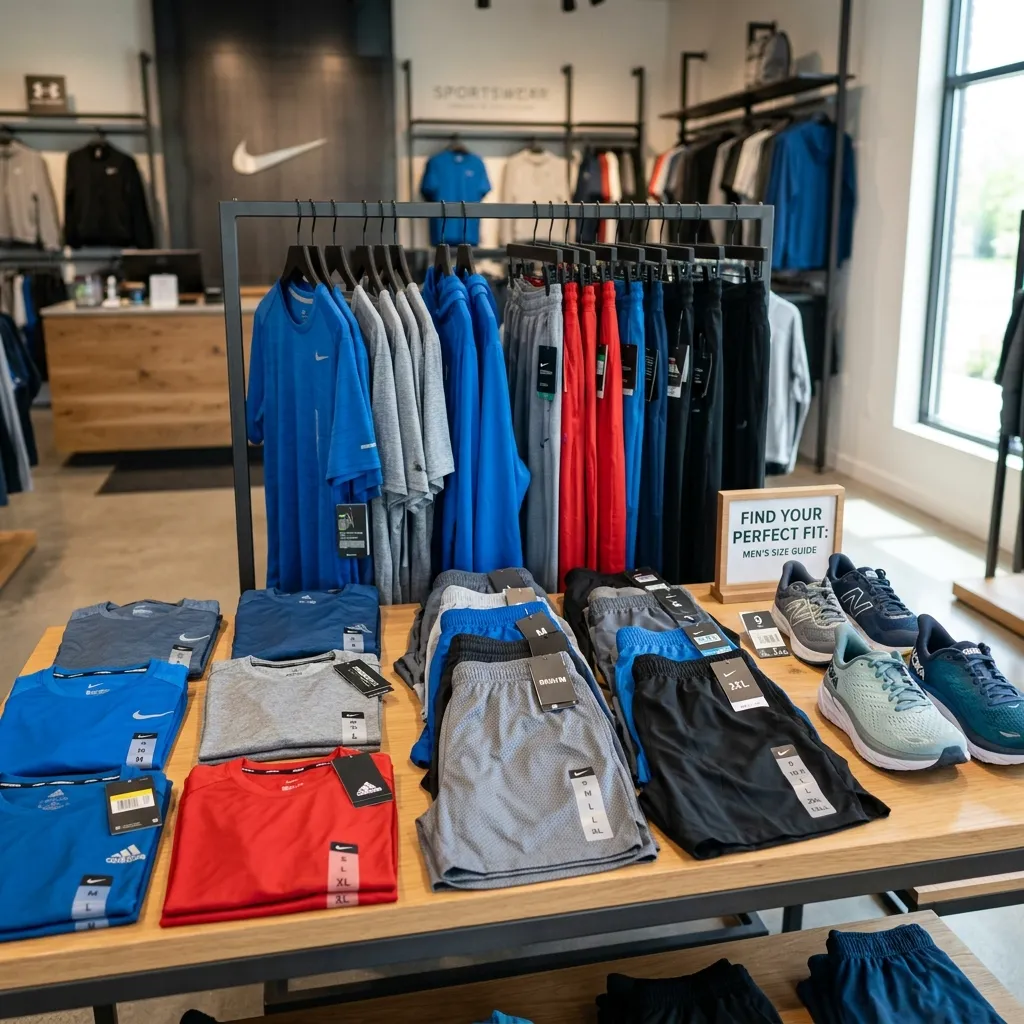
Navigating the men’s athletic apparel market requires a detailed sportswear size to account for varying muscle mass and body types. Men’s activewear is heavily categorized by intended use, from loose-fitting basketball shorts to highly compressive weightlifting singlets. Using a sportswear size guide ensures that the fit matches the activity.
For upper body garments, chest measurement is paramount. Wrap a flexible measuring tape around the fullest part of your chest, keeping it parallel to the ground. A good sportswear size guide will always anchor top sizing to this specific measurement. For bottoms, the natural waist and inseam are your guiding metrics. Athletic brands often use a combination of alpha sizing (S, M, L) and numeric sizing (32, 34, 36). A precise sportswear size guide will provide a conversion chart to bridge these two systems seamlessly. Keep in mind that a proper sportswear size guide also accounts for specific fits: regular, slim, and relaxed.
When reviewing our Men’s Athletic Wear section, always cross-reference your measurements. For instance, if your chest measures 42 inches, a standard sportswear size guide usually places you in a Large. However, if you are purchasing a slim-fit running jacket, you might consider sizing up to allow for layering.
Men’s Tops and Bottoms Comparison Table
|
Size |
Chest (Inches) |
Waist (Inches) |
Hip (Inches) |
Typical Fit Profile |
|---|---|---|---|---|
|
S |
35 – 37 |
29 – 31 |
35 – 37 |
Slim/Tailored |
|
M |
38 – 40 |
32 – 34 |
38 – 40 |
Athletic/Standard |
|
L |
41 – 43 |
35 – 37 |
41 – 43 |
Relaxed/Standard |
|
XL |
44 – 46 |
38 – 40 |
44 – 46 |
Relaxed/Roomy |
|
XXL |
47 – 49 |
41 – 43 |
47 – 49 |
Roomy/Loose |
Using this sportswear size table provides a strong baseline. Always check the brand’s specific sportswear size guide before finalizing your purchase, as European brands tend to run narrower than American brands.
Women’s Sportswear Size Guide: Support and Flexibility
A women’s sportswear size guide must address a wider variety of fit requirements, particularly concerning sports bras and leggings. The foundation of any women’s sportswear size guide is accurate bust, waist, and hip measurements. Because women’s activewear relies heavily on stretch fabrics like spandex and elastane, getting the initial measurements right is crucial for ensuring the garment remains opaque and supportive during deep stretches or squats.
When consulting a sportswear size for sports bras, you need two measurements: the ribcage (for the band size) and the fullest part of the bust (for the cup size). An accurate sportswear size guide will help you find the correct combination, which is vital for preventing breast tissue damage during high-impact activities like running or plyometrics. Our detailed High-Impact Sports Bras guide expands on this, but always refer back to a fundamental sportswear size to start.
For leggings, a sportswear size guide focuses on the waist and hips. If your waist and hip measurements fall into different size categories on a sportswear size guide, always size to fit your hips to prevent the fabric from overstretching and becoming sheer. The right sportswear size guide will also indicate the inseam length, helping you choose between capri, 7/8, or full-length styles depending on your height.
Women’s Leggings and Tops Sizing Strategy
When utilizing a sportswear size for women’s tops, consider the activity. Yoga requires fitted tops that won’t fall over your face during inversions, while running might call for a looser fit for airflow. A high-quality sportswear size guide categorizes these fits appropriately.
- Measure your bust across the fullest part while wearing an unpadded bra.
- Measure your natural waist at the narrowest point, usually just above the belly button.
- Measure your hips at the widest point of your glutes while standing with your feet together.
Following these steps alongside a trusted sportswear size guide ensures you never have to deal with rolling waistbands or sagging crotches during your workout.
Kids’ Sportswear Size Guide: Growing Room and Comfort
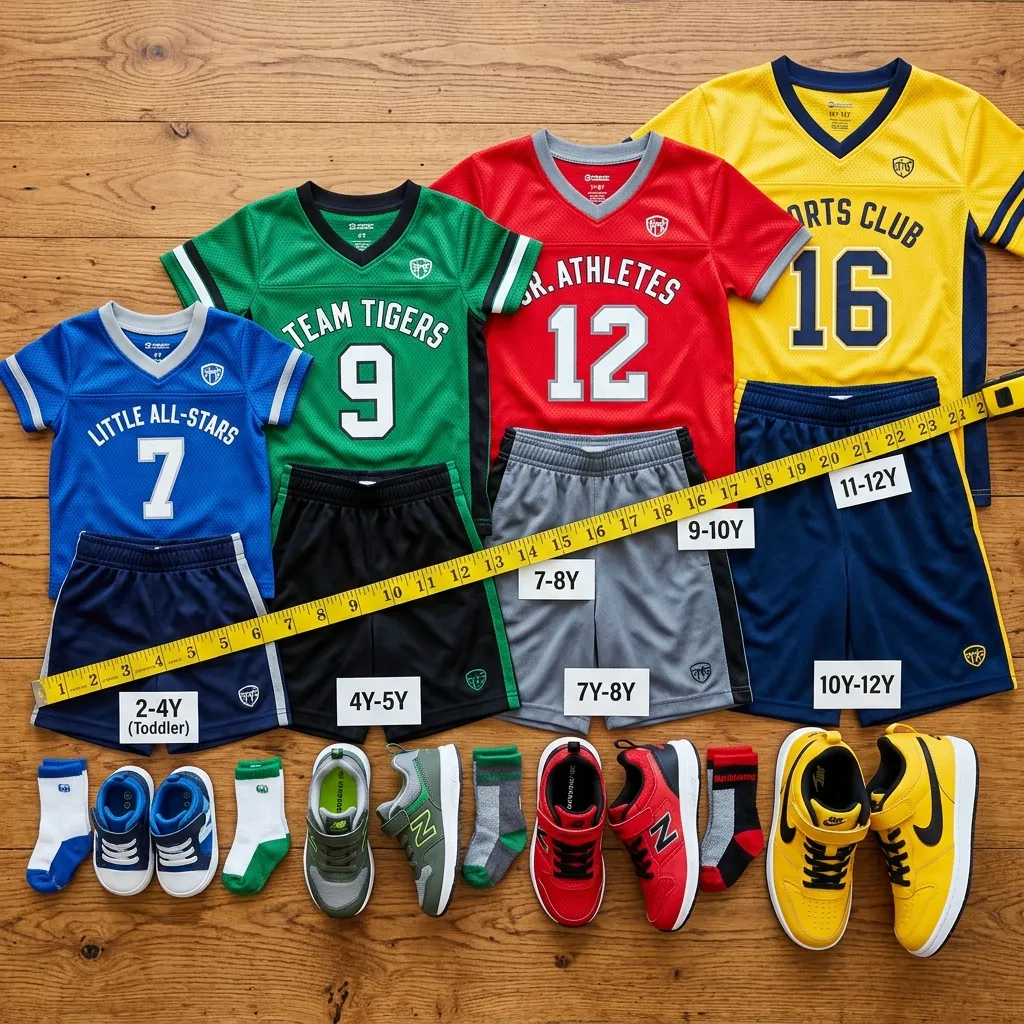
Sizing for children presents unique challenges, making a kids’ sportswear size an absolute necessity for parents. Children grow rapidly, and it is tempting to buy clothes several sizes too big. However, an accurate sportswear size will show that overly baggy athletic wear can be a tripping hazard or get caught in equipment.
A kids’ sportswear size guide is usually broken down into toddler (2T-5T), little kids (4-7), and big kids (8-20) categories. Sizing is often tied to the child’s height and weight rather than just chest and waist measurements. When using a sportswear size for children, always prioritize height. A child might be slim, but if they are tall, they need the length provided by a larger size to ensure full coverage. You can reference growth charts from authorities like the Centers for Disease Control and Prevention to anticipate sizing needs, but always cross-reference with your sportswear size guide.
Check our Youth Athletic Gear recommendations for durable options. A good sportswear size guide for kids will also recommend adjustable features, like drawstrings and elastic cuffs, which provide a customized fit and extend the garment’s usable life as the child grows.
Youth Footwear Sizing
A comprehensive sportswear size guide must touch on children’s footwear. Kids’ feet grow in spurts, so measuring their feet every three to four months is highly recommended. A reliable sportswear size for shoes will advise leaving about a thumb’s width of space between the longest toe and the end of the shoe to accommodate growth and prevent toe-box constriction during active play.
How to Measure Accurately for Your Sportswear Size Guide
To make the most of any sportswear size , you must gather accurate measurements. Many people try to guess their measurements based on their daily wear, which completely invalidates the effectiveness of a sportswear size guide. Athletic clothing fits differently than denim or business attire.
First, invest in a soft, flexible measuring tape. When taking measurements to use with a sportswear size guide, stand straight and breathe normally. Do not suck your stomach in, as this will lead you to choose a size that is too tight for comfortable athletic exertion. When a sportswear size guide asks for your chest measurement, ensure the tape is completely level across your back. If the tape sags, your measurement will be artificially large.
If you are using a sportswear size guide for custom gear or highly specialized equipment like a triathlon suit, consider having a friend or a professional tailor take your measurements. This ensures maximum accuracy. Remember, the data you feed into the sportswear size dictates the quality of the result.
Essential Pro Tips for Measuring
Every elite sportswear size guide recommends a few insider strategies to ensure absolute perfection in your fit.
- Measure at the end of the day: Your body naturally expands and swells slightly as the day goes on, especially your feet. Measuring later in the day ensures your sportswear size recommendations won’t feel constricting during evening workouts.
- Wear the right undergarments: Measure while wearing the type of underwear or sports bra you plan to wear with the garment.
- Keep the tape relaxed: The tape should sit flush against your skin without digging in. If it leaves a mark, it is too tight, and your sportswear size result will be inaccurate.
Common Mistakes to Avoid When Using a Sportswear Size Guide
Even with a detailed sportswear size guide at your disposal, certain pitfalls can ruin your shopping experience. The most frequent mistake is assuming uniformity across brands. As any good sportswear size guide will warn you, a Medium at Nike is not necessarily a Medium at Under Armour. Always consult the specific brand’s sportswear size guide rather than relying on a generalized chart.
Another massive mistake is ignoring the fabric composition. A sportswear size guide might indicate you are a size large, but if the garment is made of 100% cotton (which shrinks) versus a high-elastane blend (which stretches heavily), the real-world fit will differ drastically. A thorough sportswear size will always remind you to check the material breakdown. Refer to our Performance Fabric Guide for more insight into how materials behave under stress.
Lastly, people often ignore international sizing variations. A sportswear size guide dealing with UK, EU, and US sizes requires careful translation. US sizes are generally larger and more relaxed than EU sizes. If you buy a European brand based on your US size without consulting an international sportswear size guide, you will likely end up with clothing that is entirely too small.
Ignoring the “Intended Fit” Note
Many shoppers look at a sportswear size guide, find their measurements, and ignore the product description regarding “intended fit.” If a jacket is described as “oversized” and you prefer a tailored look, you should size down regardless of what the standard sportswear size says. Understanding context is just as important as the numbers on the sportswear size .
The Impact of Fabric and Technology on Sizing
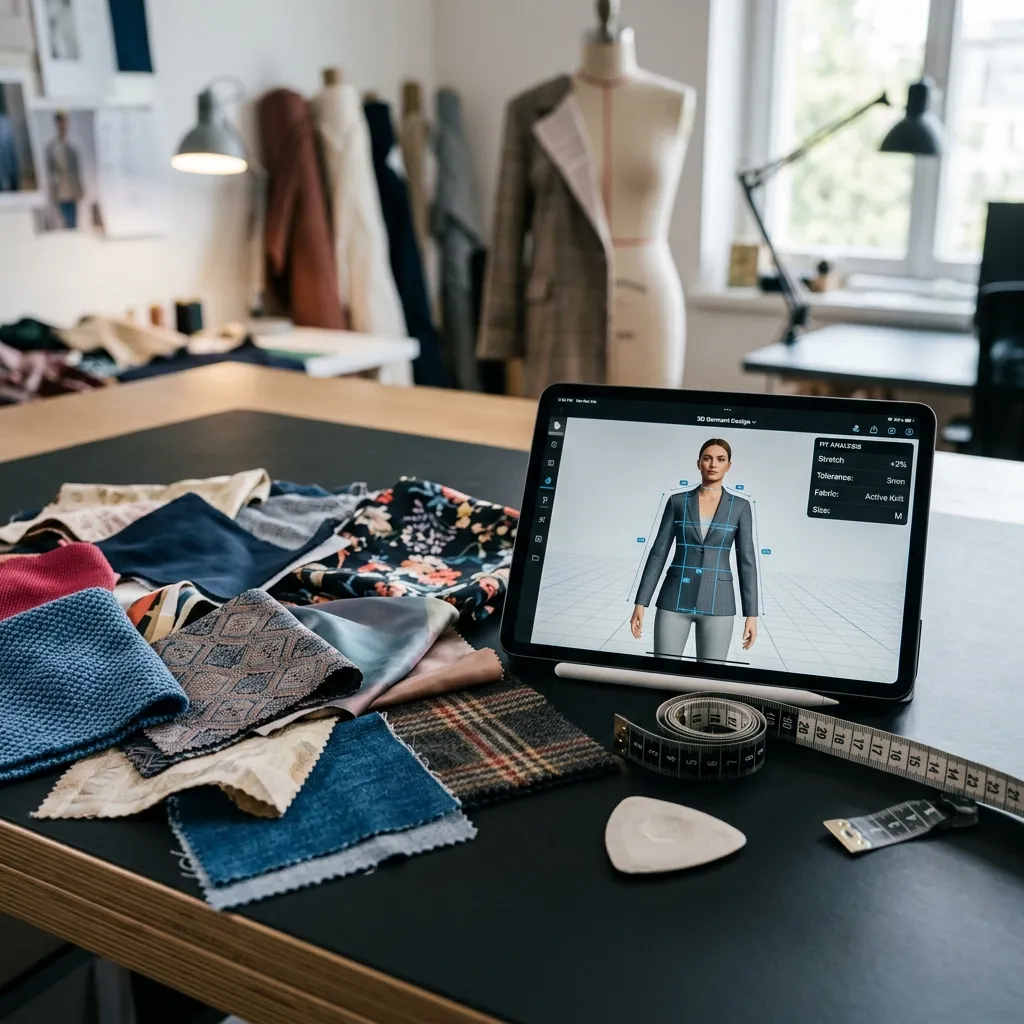
A modern sportswear size guide must account for the rapid advancements in textile engineering. Ten years ago, a sportswear size guide was a rigid set of rules based on static fabrics. Today, activewear features four-way stretch, targeted compression zones, and seamless construction.
When a garment uses four-way stretch technology, the sportswear size becomes slightly more forgiving. The fabric can accommodate a wider range of body shapes within a single size bracket. However, garments with high percentages of polyester and low elastane have a rigid structure. For these items, you must adhere strictly to the exact numbers on your sportswear size guide.
Seamless activewear also changes how we interpret a sportswear size guide. Without traditional seams to anchor the fabric, seamless garments often feel tighter initially but mold to the body over time. A sophisticated sportswear size will advise you to stick to your true size in seamless wear, even if it feels snug upon first try-on, as it will relax to fit your specific contours perfectly. High-authority fashion bodies like the Council of Fashion Designers of America frequently note how material innovation continuously redefines traditional size charting.
Compression Wear vs. Loose Fit
When consulting a sportswear size for recovery compression gear, precision is non-negotiable. Medical-grade athletic compression relies on specific pressure measurements (mmHg) applied to exact circumferences of your limbs. If your sportswear size guide measurements are off by even half an inch, you may lose the venous return benefits of the garment. Conversely, a sportswear size guide for a loose-fit jogging bottom offers plenty of leeway, prioritizing comfort over biomechanical support.
Conclusion
Mastering the perfect fit is effortless when you utilize a comprehensive sportswear size . By taking accurate measurements, understanding fabric properties, and recognizing brand discrepancies, you elevate your athletic comfort and performance. Bookmark this ultimate sportswear size for your next activewear purchase, and start training in gear that truly supports your goals. Ready to upgrade your workout wardrobe? Shop our perfectly-fitted collection today!
FAQs
1. How do I know if I need to size up or down in activewear?
Always consult the specific brand’s sportswear size . Generally, size down for high-compression activities to ensure support, and size up for outerwear or relaxed-fit lounging items.
2. Does a sportswear size guide differ from regular clothing size charts?
Yes, a sportswear size specifically accounts for athletic movement, stretch fabrics, and compression requirements, whereas regular clothing charts focus primarily on static aesthetics.
3. Why are my measurements different across different brand size guides?
Brands use different fit models and base their sizing on different demographic data. A sportswear size guide for an American brand will typically feature more relaxed proportions than a European brand.
4. How often should I take my measurements for a sportswear size ?
It is recommended to retake your measurements every six months, or whenever you experience a noticeable change in your weight or muscle mass, to ensure your sportswear size remains accurate.
5. What is the most critical measurement in a men’s sportswear size guide?
For tops, the chest measurement is the most critical. For bottoms, the natural waist and inseam dictate the accuracy of the sportswear size guide result.
6. How does fabric stretch affect the accuracy of a sportswear size guide?
High-stretch fabrics (high elastane/spandex) offer a more forgiving fit, allowing you to span across sizes slightly. Rigid fabrics require strict adherence to the exact numbers on the sportswear size .
7. Should a sportswear size guide be used differently for seamless clothing?
Seamless clothing often feels tighter at first but molds to the body. Stick to your true size as indicated by the sportswear size , trusting the fabric to adapt to your shape.
8. How do I measure my inseam accurately for a sportswear size guide?
Take a pair of pants that fit you perfectly. Measure from the crotch seam down the inside of the leg to the hem. Match this number to the inseam listed on your sportswear size .
9. Why is a kids’ sportswear size guide based on height rather than waist?
Children’s proportions vary wildly, but height is the most consistent indicator of the garment length needed to ensure full coverage and safety, making it the anchor of a kids’ sportswear size .
10. Can I use my bra size for a sports bra sportswear size guide?
Not directly. You must measure your ribcage and fullest bust point fresh, as sports bras compress differently than daily bras. Use these raw numbers against the specific sports bra sportswear size .
